Tool theft & recovery
How to Prove Ownership of Stolen Tools
The records that can help demonstrate that a missing tool belongs to you or your business.
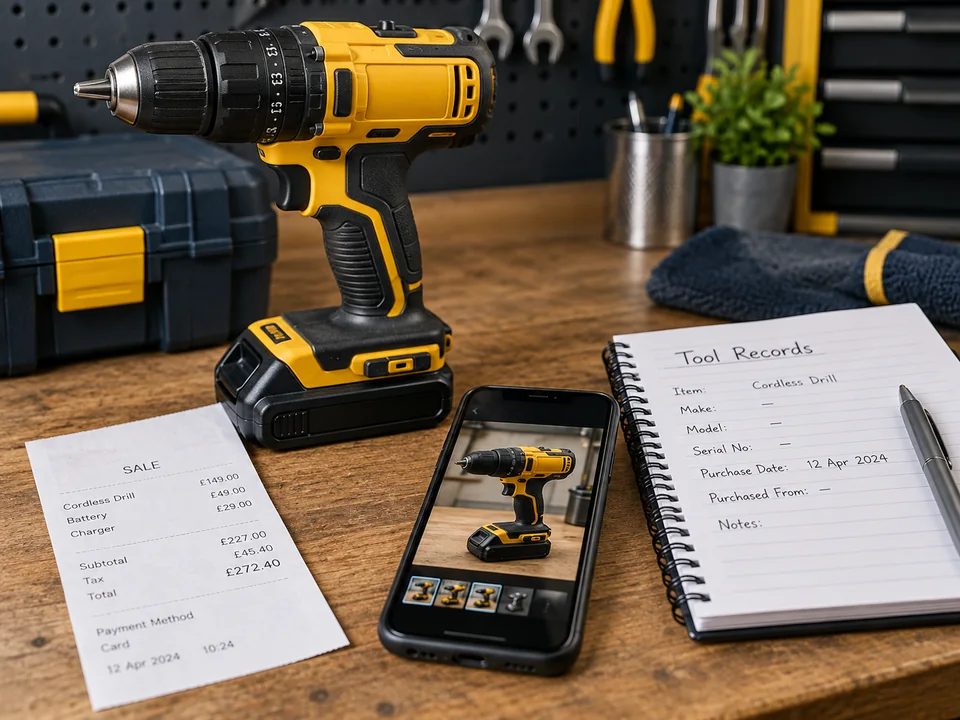
Proof of ownership is usually strongest when several pieces of information agree with each other. A receipt may show purchase, a serial number identifies a specific unit, and photographs connect that unit to your records and working life.
Start with purchase evidence
Receipts, invoices, order confirmations and supplier account histories can help show that you or your business purchased an item. Keep the document in a form that remains readable and link it to the corresponding tool record rather than storing all receipts in one undifferentiated folder.
If a receipt lists several items, note which line relates to the tool. For older purchases where the original receipt is unavailable, keep any legitimate alternative evidence you have rather than creating a replacement document yourself.
Record unique identifiers and property marks
Serial numbers are particularly useful because they can distinguish one physical tool from another. Police.uk recommends recording serial numbers for tools and electrical items, and also points to property marking and registration as ways to make recovered property easier to identify.
If you mark a tool with a business name, postcode, forensic marking product or another identifier, record what was used and take a clear photo of the mark.
Use photographs to connect the record to the real tool
Take a full photograph plus close-ups of the serial plate, distinctive wear, engravings and unusual accessories. Photos taken over time can also help show that an item was in your possession before an incident.
Avoid relying on generic manufacturer images. They show what a model looks like, not that a particular unit belonged to you.
Keep dates, values and locations consistent
A useful ownership record should tell a coherent story: when you bought the tool, what it cost, where you normally keep it and what identifying details it has. If information changes, update the record rather than creating a second competing entry.
Where the purchase value is unknown, label it as unknown or estimated in your own notes. Do not present an estimate as an original purchase price.
Prepare a concise evidence pack after a theft
If tools are stolen, pull together the strongest information for each missing item in a simple order: description, serial number, photographs, purchase evidence and property-marking details. Keep the police crime reference with the pack.
This does not guarantee recovery or an insurance outcome, but it makes it easier for the relevant organisation to understand exactly which item you are talking about.
Improve the next record while the lesson is fresh
After replacing a tool, record the new item immediately. Add the serial number, photos and receipt before the packaging is discarded or the paperwork disappears into a drawer.
The best ownership system is not complicated; it is simply complete enough to identify important equipment without reconstructing the story later.
Common questions
Things people often ask.
Is a receipt enough to prove ownership?+
A receipt can be strong evidence, but a combination of receipt, serial number, photographs and inventory records is usually more useful because it connects the purchase to a specific physical item.
Do photographs need to show me holding the tool?+
No. The useful photographs are those that clearly identify the tool, its serial number, distinctive marks and condition.
Can property marking help?+
Yes. Police guidance recommends property marking and recording identifiers because clearly identifiable property can be harder to sell and easier to connect with its owner if recovered.
Official sources & further reading
Check the current guidance.
Rules, tax treatment, policy conditions and security advice can change. These official sources support the practical guidance above and are the right place to verify current requirements.