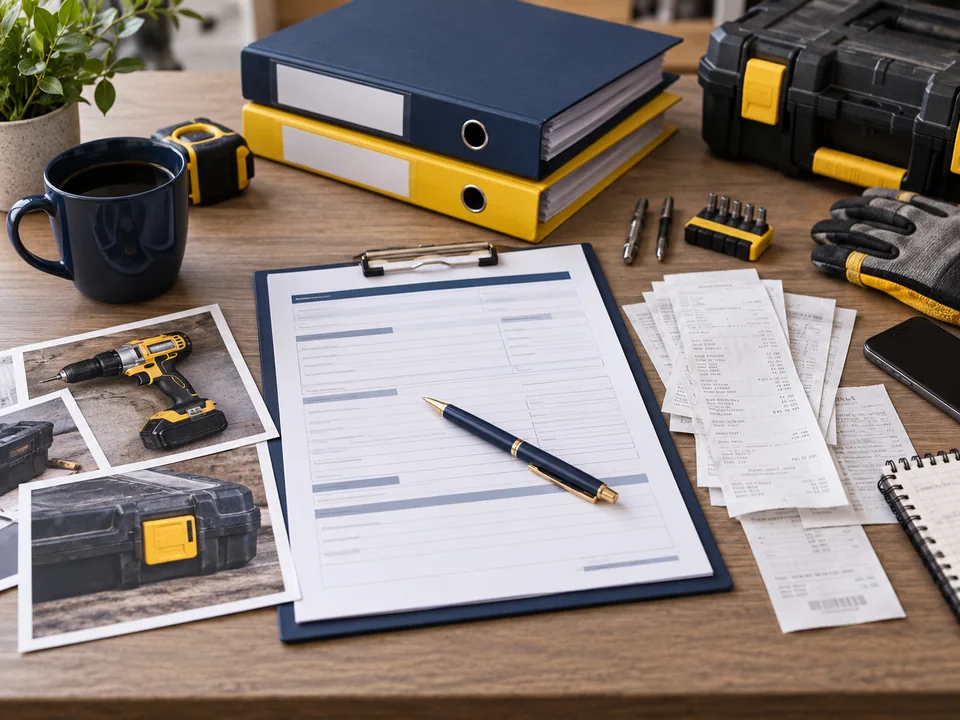
Insurance readiness
How to Prepare Your Tool Records Before Something Goes Wrong
A preventative record-keeping routine that takes minutes now and can save hours later.
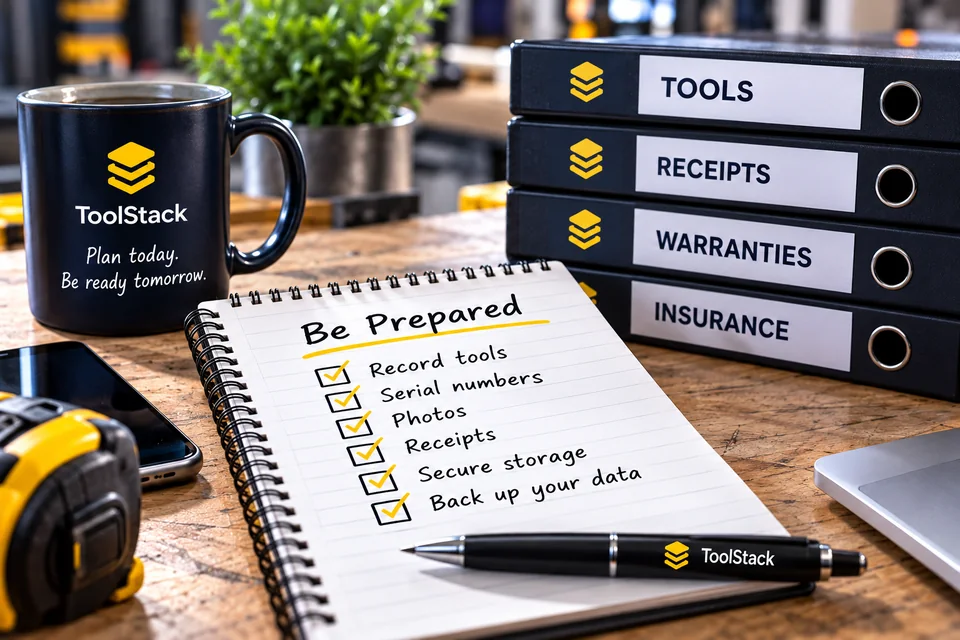
The worst time to look for serial numbers, receipts and photographs is immediately after a theft or loss. A small amount of preparation turns those details into information you can retrieve quickly instead of reconstructing under pressure.
Record new tools immediately
Make “add it when you buy it” the default. Capture the receipt, serial number and basic photos before packaging is discarded and the tool disappears into daily work. This takes minutes and avoids a future backlog.
If you acquire equipment second-hand, record whatever legitimate ownership and identification details are available at the time of purchase.
Work backwards through high-value equipment
You do not need to catalogue every screwdriver before the system becomes useful. Start with high-value power tools, specialist equipment and items that would be expensive or difficult to replace.
Add a few older tools at a time until the important gaps are covered.
Check identifiers and ownership evidence
Police.uk recommends recording serial numbers, taking photographs of valuable items and keeping receipts or related documents so ownership can be proved. Make sure your saved serial numbers are readable and attached to the right tool.
Add property-marking details where relevant and photograph distinctive marks.
Review van and storage security alongside the records
Records are not a substitute for prevention. Review where tools are left overnight, whether the van is locked and checked, whether lockable internal storage is appropriate and whether property marking would help.
If your insurer specifies security conditions, build those into your routine rather than relying on memory.
Protect the records themselves
If your records are on an iPhone or iPad, keep supported backups enabled and confirm the most recent backup has completed. Apple explains that iCloud or computer backups can be used when a device is replaced, lost or damaged.
For especially important business information, use reports or exports where appropriate so one device is not your only recovery path.
Run a five-minute readiness test
Pick one expensive tool and pretend it was stolen. Can you find the serial number, photos, receipt, value and insurer details in five minutes? If not, fix the weak point while nothing is wrong.
Repeat the test occasionally. It is a practical way to keep the system honest without creating a large audit project.
Common questions
Things people often ask.
Which tools should I record first?+
Start with the equipment that is expensive, essential to your work or easy to identify by serial number. That gives useful protection quickly.
How often should I run the readiness check?+
A quick quarterly check is a sensible starting point, and you should also review records after major purchases, vehicle changes or changes to storage.
Do good records replace van security?+
No. Records help after an incident; they do not prevent theft. Use sensible physical security, parking and property-marking measures as well.
Official sources & further reading
Check the current guidance.
Rules, tax treatment, policy conditions and security advice can change. These official sources support the practical guidance above and are the right place to verify current requirements.