Insurance readiness
What Records Do You Need for a Tool Insurance Claim?
A practical checklist of the information worth keeping before you ever need to make a tool insurance claim.
Every insurer and policy can have different claim requirements, limits and exclusions. The safest approach is to keep clear ownership and identification records now, then follow your insurer’s exact instructions if a loss occurs.
Read your own policy before you need it
Check what property is covered, where it is covered, any overnight vehicle conditions, excesses, single-item limits and requirements for security or proof. Policy wording is more important than generic advice because two tradespeople with similar tools can have very different cover.
If anything is unclear, ask the insurer or broker while there is no active claim. Keep useful policy documents and contact details somewhere you can access even if your phone or van is unavailable.
Maintain a current tool inventory
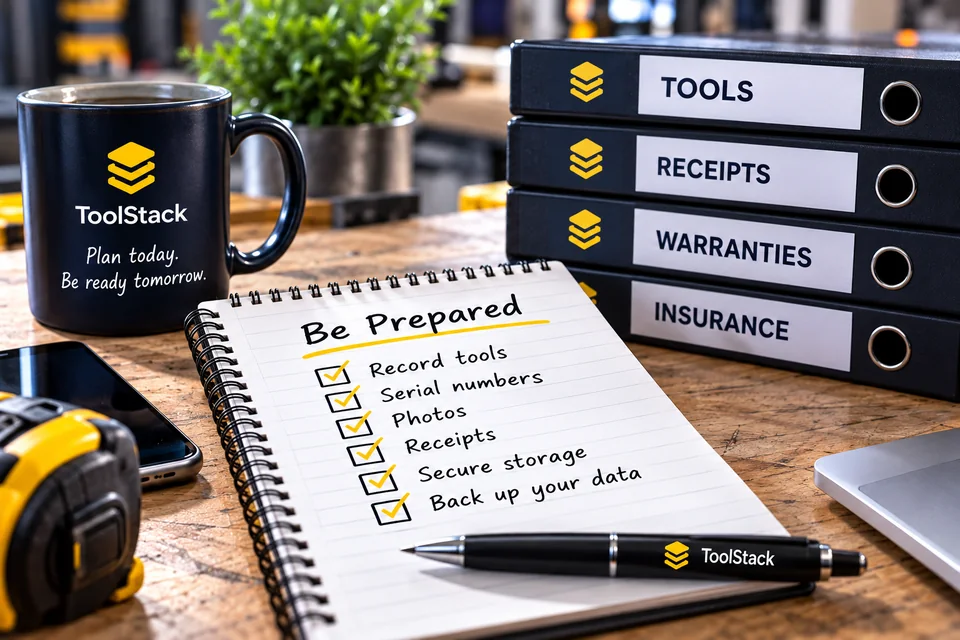
List important tools with brand, model, serial number, purchase date, value and usual location. Remove or archive equipment you no longer own and mark replacements clearly so you do not accidentally include the wrong item in a claim.
A short inventory review every few months is more reliable than rebuilding years of purchases after a theft.
Keep proof of purchase and ownership
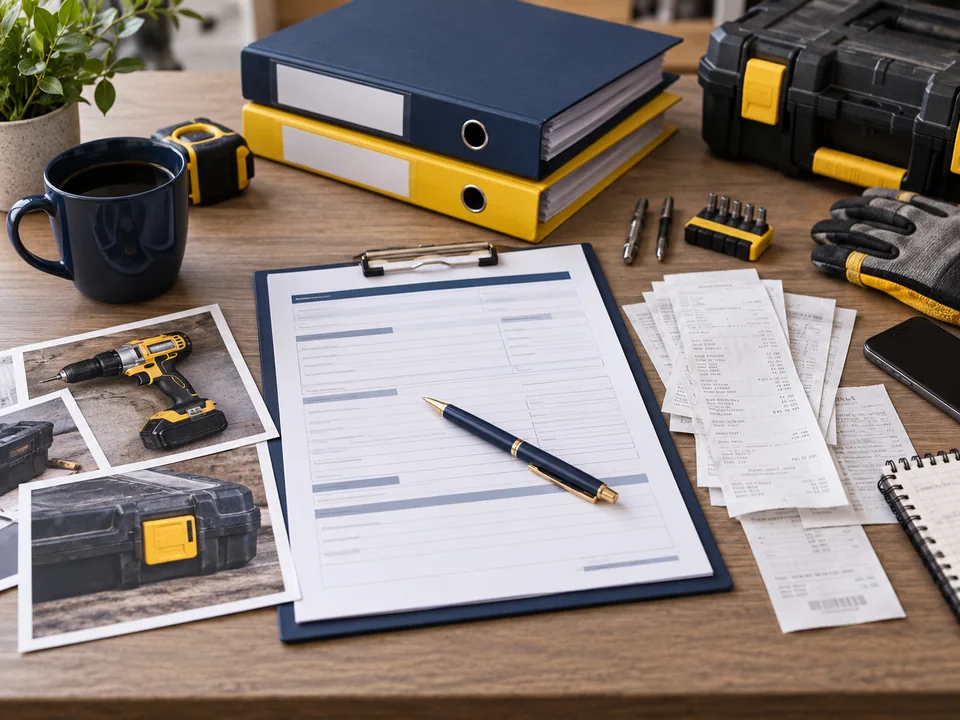
Store receipts, invoices and supplier confirmations where possible. Police.uk recommends keeping documents such as receipts alongside serial numbers and photographs so ownership can be demonstrated.
For older items without a receipt, retain other genuine evidence such as supplier account history, photographs and serial numbers. Ask your insurer what alternatives it accepts rather than assuming a particular document will be sufficient.
Photograph tools and identifying details
Keep at least one clear full-tool photo and one close-up of the serial or identification plate. Add photos of distinctive marks, engravings, cases or unusual attachments where they help identify the item.
Good photos can also make your own inventory easier to review, reducing mistakes when several tools share similar names or models.
Document the incident separately from the inventory
After a theft or loss, keep the crime reference where applicable, date and location of the incident, photographs of damage, the definitive list of missing items and the communications you have with the insurer.
Do not overwrite the original tool record with incident notes. Keeping the asset record and the incident history distinct makes both easier to understand.
Send clear, consistent information
When you make a claim, follow the insurer’s requested format and answer accurately. Use the same tool names, serial numbers and values throughout the claim. If something is estimated or unavailable, say so.
ToolStack can help organise the underlying records, but only your insurer can tell you what is required for your policy or determine whether a claim is covered.
Common questions
Things people often ask.
Will these records guarantee that an insurance claim is paid?+
No. Cover depends on the policy, circumstances and insurer’s assessment. The purpose of good records is to make the facts easier to demonstrate, not to guarantee an outcome.
Should I record replacement cost or what I originally paid?+
Keep the original purchase price where known and follow your insurer’s instructions about the values it needs for a claim. Do not silently substitute one for the other.
How often should I review my inventory for insurance purposes?+
There is no universal schedule. A light review every few months and whenever you make a significant purchase or change vehicle is a practical routine.
Official sources & further reading
Check the current guidance.
Rules, tax treatment, policy conditions and security advice can change. These official sources support the practical guidance above and are the right place to verify current requirements.