Business admin
A Practical Record-Keeping Checklist for UK Tradespeople
A straightforward checklist for keeping everyday tool, purchase and mileage records under control.
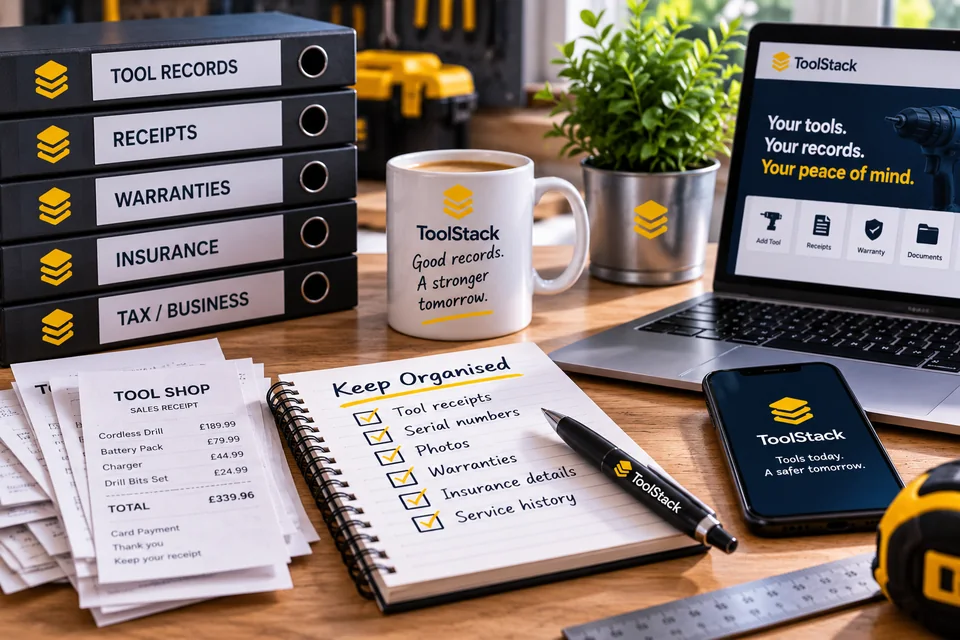
Good records should support the work rather than become another job. Keep the information that helps you identify assets, support business expenses, record journeys and recover quickly when paperwork or devices go missing.
Tool and equipment records
For important equipment, keep brand, model, serial number, purchase date, value, photographs and current status. Add usual storage location if it helps you manage tools across a van, workshop or site.
Police.uk recommends recording serial numbers, taking photos of valuable items and retaining documents such as receipts to help prove ownership.
Purchase and expense evidence
For self-employed business records, GOV.UK says you need records of business expenses and should keep supporting evidence such as receipts, bank statements and invoices. Capture purchase evidence while it is readable and link tool receipts to the relevant inventory item where practical.
Do not treat ToolStack as your complete accounting system; keep the records required for your business and tax position.
Mileage and journey records
If you record business mileage, capture journeys consistently rather than reconstructing them at year end. The details required depend on whether you are self-employed or an employee and on the method you use, so check current HMRC guidance.
A regular weekly review is a simple way to catch missing or duplicate journeys.
Insurance and incident readiness
Keep current policy information, understand relevant security conditions and know where to find the tool records you would need after theft or damage. After an incident, keep the police crime reference where applicable and store claim correspondence separately from the asset record.
Never assume a generic checklist replaces your insurer’s own claim requirements.
Backup and recovery
If important records live on iPhone or iPad, use the supported backup options and occasionally check the date of the last successful backup. Apple supports restoring a replacement device from iCloud or a computer backup.
For business-critical information, periodic reports or exports can provide another layer of resilience.
Retention and regular review
GOV.UK sets minimum retention periods for self-employed business records. Keep tax records for as long as your circumstances require, even if a tool has been sold or replaced.
Set a light review routine—monthly or quarterly—to archive old tools, attach missing evidence and make sure records still reflect the way you work.
Common questions
Things people often ask.
Can ToolStack replace my accountant or bookkeeping system?+
No. ToolStack helps organise practical tool, receipt and mileage records. Use your accounting process, HMRC guidance and professional advice for tax and statutory requirements.
What is the minimum routine that still works?+
Record important tools when you acquire them, capture purchase evidence, log business journeys consistently, review records regularly and keep supported backups enabled.
How often should records be reviewed?+
Monthly or quarterly is usually manageable for practical records, with immediate updates after important purchases, thefts, sales or changes to your vehicle and storage arrangements.
Official sources & further reading
Check the current guidance.
Rules, tax treatment, policy conditions and security advice can change. These official sources support the practical guidance above and are the right place to verify current requirements.